Vibe Coding: Integrating Backend & APIs
Harnessing AI to smoothly connect your backend and APIs.


Happy Thursday!
Insight Trunk is a free lifetime library—a modern replacement for outdated encyclopedias. From Monday to Saturday, we deliver a 10-minute read on a specific subject, with fresh topics each week. Two years later, we revisit each theme with updated insights from our archives—so you’ll never miss a thing. You can unsubscribe anytime using the link at the bottom of this newsletter.
Having built our frontend, we now connect it to a powerful backend. Today, we’ll use AI to define our API endpoints, generate server-side logic and a database, and establish the crucial link for end-to-end data flow. Let’s give our app a brain!
🧑💻 In this week’s edition: Vibe Coding
Monday - Understanding AI Coding Tools
Tuesday - Mastering Prompt Engineering
Wednesday - Building a Basic Frontend App
Thursday - Integrating Backend & APIs
Friday - Debugging and Optimization
Saturday - Advanced Techniques and Scaling
Question of the day
What is the single most effective prompt to define the RESTful API endpoints for a user-authentication service?
Let’s find out !
Integrating Backend & APIs
Let’s break it down in today discussion:
Defining the API Blueprint
Generating Server-Side Logic and Database
Connecting Frontend to New Backend
Testing End-to-End Data Flow
Read Time : 10 minutes
💻️Defining the API Blueprint
The journey to a full-stack application begins with the meticulous design of a well-defined API blueprint. This foundational document serves as the crucial contract between the frontend and backend, specifying how data will be exchanged. By leveraging an AI assistant, developers can bypass a manual architectural phase, using natural language to generate a precise API specification. This approach streamlines the initial planning, ensuring that all subsequent development is built upon a clear, consistent, and scalable structure.
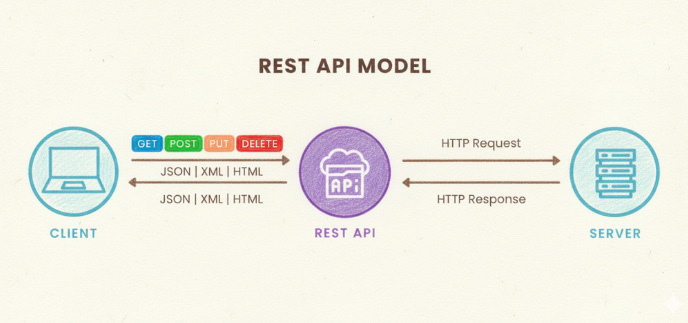
The process involves formally describing the application’s data requirements and functionalities. A prompt can specify the resources, their respective HTTP methods, and the data schema for interactions. For instance, a request for a project management application could state, “Generate the RESTful API endpoints for managing projects and tasks. Include endpoints for creating, reading, updating, and deleting both resources.” This level of detail provides the AI with all the necessary information to construct a robust blueprint.
The output from the AI is a tangible API specification, listing each endpoint, its corresponding HTTP method (e.g., POST /projects), and the required JSON structure for both requests and responses. This output acts as a formal, standardized document that not only accelerates the initial phase but also serves as an invaluable reference for both frontend and backend teams, significantly reducing potential for miscommunication and integration errors.
This video offers comprehensive details about APIs.
⌨️Generating Server-Side Logic and Database
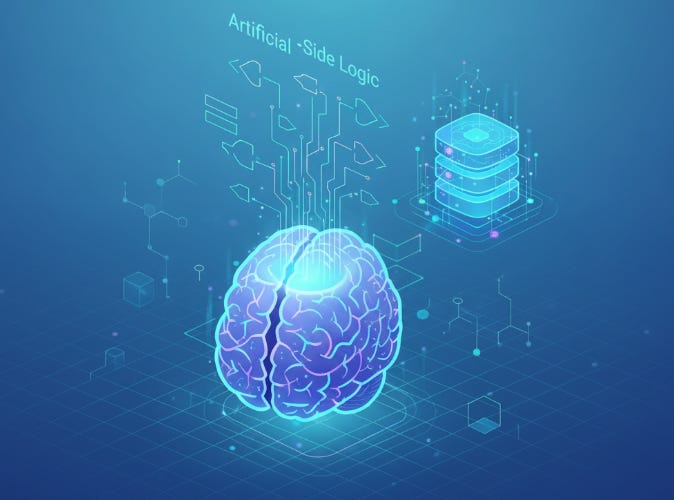
Once the API blueprint is established, the next phase involves generating the server-side logic that will execute the application’s core functions. The AI assistant can efficiently translate high-level requirements into tangible code that handles incoming requests, processes data, and interacts with a database. This capability allows developers to rapidly build out the backend’s core engine, focusing on functionality and business logic rather than boilerplate code.
The process is initiated with targeted prompts that specify the desired behavior for a particular endpoint. For example, a developer might request, “Generate the Node.js Express route handler for the POST /api/users endpoint. The logic should validate that the email and password are present, hash the password using a secure algorithm, and save the new user to a MongoDB collection.” This detailed instruction enables the AI to produce a complete and secure controller that aligns with best practices.
Concurrently, the AI can be prompted to define the database schema itself, ensuring seamless synchronization between the application logic and the data layer. By generating a schema that perfectly matches the data being sent from the frontend and processed by the backend, the AI mitigates potential data integrity issues. This parallel generation of logic and schema is a critical advantage, as it builds a cohesive and robust data-driven application from the outset.
Unpack the complexities of backends/databases for Vibe Coding with the help of this article.
🖥️Connecting Frontend to New Backend
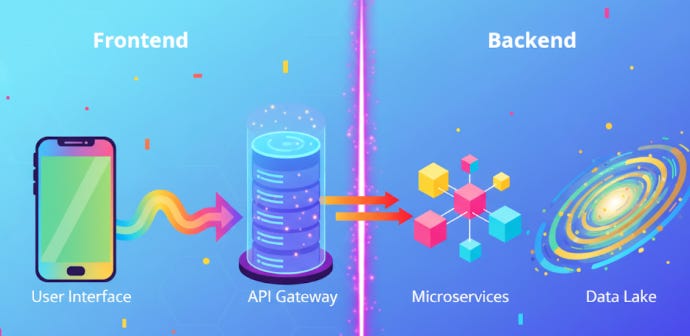
The transition from a defined backend to a cohesive full-stack application requires a precise bridge between the server and the user interface. This critical phase involves writing the asynchronous client-side code that initiates network requests to the API. While seemingly straightforward, this task demands careful attention to detail, including proper data serialization, request headers, and robust error handling. An AI assistant can be an invaluable partner in this process, automating the generation of the necessary logic with high accuracy.
The developer’s role is to provide a detailed prompt that outlines the exact nature of the API call. For example, a formal request could be: “Generate a JavaScript async function that sends a POST request to the /api/users endpoint. The function should serialize the user’s data into a JSON payload, include an appropriate Content-Type header, and gracefully handle both a 200 (OK) and a 400 (Bad Request) status code from the server.” This comprehensive prompt ensures the AI produces a complete and functional solution.
Furthermore, the AI can assist with the crucial logic of updating the UI based on the API’s response. After a successful request, the AI can generate the code to display a confirmation message to the user, clear the form inputs, or redirect to a new page. Conversely, in the event of an error, it can provide code to parse the error message from the API and display it to the user in a clear and helpful format. This holistic approach ensures a seamless and professional user experience.
Take your learning further by watching this video.
🖱️Testing End-to-End Data Flow
The final and most critical phase of full-stack development is the validation of the entire application through comprehensive testing. End-to-end tests provide the assurance that the frontend, backend, and database layers are functioning harmoniously as a single, cohesive system. AI assistants are uniquely positioned to automate this often tedious process by generating comprehensive test scripts that confirm the application’s integrity from the user interface to the data layer.

A developer can use precise prompts to instruct the AI to build a complete test suite for the application. For instance, using a framework like Jest and a library such as Supertest for API testing, a formal request could be: “Generate a test suite that simulates the user registration and login process. The test should perform a POST request to the /api/users endpoint and verify that a 201 status code is returned and that the newly created user is successfully retrievable from the database.” This level of detail allows the AI to produce a robust and targeted test.
Beyond simple unit tests, the AI can be used to generate scripts that mimic real-world user workflows. This could include a test that simulates a user logging in, creating a new record, and then updating or deleting it. This end-to-end validation process is crucial for catching subtle integration bugs that might otherwise go undetected. By delegating test generation to an AI, developers can ensure their applications are robust and reliable while saving significant time.
Summary
Defining the API Blueprint
The first step in building a full-stack application is to use AI to design the API blueprint.
AI can act as a digital architect, translating high-level descriptions into a precise API specification.
A well-crafted prompt should define the endpoints, their HTTP methods, and the data schema for requests and responses.
This automated process creates a clear, structured foundation for the entire application, saving significant time.
Generating Server-Side Logic and Database
Once the API is designed, the AI can generate the server-side code that powers it.
You can prompt the AI to write the controller logic for handling requests, validating data, and interacting with a database.
The AI can also generate the database schema, ensuring perfect synchronization with the application logic.
This simultaneous generation of logic and data models builds a cohesive and robust backend from the start.
Connecting Frontend to New Backend
The next critical task is to write the client-side code that bridges the frontend and backend.
AI assistants can generate the necessary asynchronous JavaScript functions to make API calls.
A detailed prompt should specify the request method, the JSON payload, and the appropriate headers.
The AI can also generate code to handle both successful responses and errors, ensuring a smooth user experience.
Testing End-to-End Data Flow
The final and most crucial step is to validate the entire application with end-to-end testing.
AI can generate comprehensive test scripts that simulate real-world user workflows.
You can prompt the AI to create a test suite that validates the entire data flow from the frontend to the backend and the database.
This ensures the application is robust and helps to catch complex integration bugs that might otherwise go undetected.
Tips for backend API integration.
Define a clear API contract - Before generating any backend code, use a detailed prompt to define the API’s endpoints, request bodies, and expected responses in a single, comprehensive “contract.”
Use a “scaffolding” approach - Ask the AI to generate the boilerplate code for a full-stack project, including routing, a database schema, and controllers, then fill in the specific business logic yourself.
Provide database schema as context - When writing server-side code, always include the database schema in your prompt to ensure the AI generates code that is perfectly compatible with your data structure.
Explicitly request error handling - Always instruct the AI to include robust error handling for every API route, specifying how to manage invalid input or database failures.
Write API calls with error handling in mind - Use prompts to generate frontend API calls that not only handle successful responses but also gracefully manage and display errors from the backend.
Answer of the day
What is the single most effective prompt to define the RESTful API endpoints for a user-authentication service?
Define RESTful endpoints for user authentication.
This prompt is effective because “RESTful” immediately provides a structured framework for the AI, guiding it to use standard HTTP methods like GET, POST, and PUT. The term “user authentication” narrows the focus to specific endpoints like /api/register and /api/login. This precision enables the AI to generate a complete, functional blueprint for the backend API.
That’s A Wrap!
Want to take a break? You can unsubscribe anytime by click this link at the bottom of your email.