

Religion - Dharmic Religions
Hinduism, one of the world's oldest and most diverse religious traditions, originating from the Indian subcontinent, offers a rich philosophical framework for understanding existence.

Happy Wednesday!
Insight Trunk is a free lifetime library—a modern replacement for outdated encyclopedias. From Monday to Saturday, we deliver a 10-minute read on a specific subject, with fresh topics each week. Two years later, we revisit each theme with updated insights from our archives—so you’ll never miss a thing. You can unsubscribe anytime using the link at the bottom of this newsletter.
Today, we're exploring the fascinating Dharmic religions: Hinduism, Buddhism, Sikhism, and Jainism. Originating in the Indian subcontinent, these faiths offer unique perspectives on existence, karma, and liberation. Get ready to discover their profound philosophies and diverse practices.
🧑💻 In this week’s edition: Religion
Monday - Understanding Religion
Tuesday - Abrahamic Religions
Wednesday - Dharmic Religions
Thursday - East Asian Religions
Friday - Ancient and Indigenous Religions
Saturday - Religion in the Modern World
Question of the day
In Buddhism, what are the core truths about suffering and its cessation?
Let’s find out !
Dharmic Religions
Let’s break it down in today discussion:
Hinduism: Dharma, Karma, Samsara
Buddhism: Four Noble Truths
Sikhism: One God, equality
Jainism: Non-violence, asceticism
Read Time : 10 minutes
💻️Hinduism: Dharma, Karma, Samsara
Hinduism, one of the world’s oldest and most diverse religious traditions, originating from the Indian subcontinent, offers a rich philosophical framework for understanding existence. Central to its cosmology and ethics are the interconnected concepts of Dharma, Karma, and Samsara, which guide the lives of its adherents.
Dharma refers to a multifaceted concept encompassing righteous conduct, moral duties, ethical principles, and cosmic order. It is often understood as the inherent nature of reality and the prescribed way of living in harmony with it. For individuals, Dharma outlines one’s specific responsibilities based on their social role, age, and spiritual stage, emphasizing virtuous action and adherence to universal ethical laws. For example, a king’s Dharma is to protect his people, while a student’s Dharma is to diligently pursue knowledge.
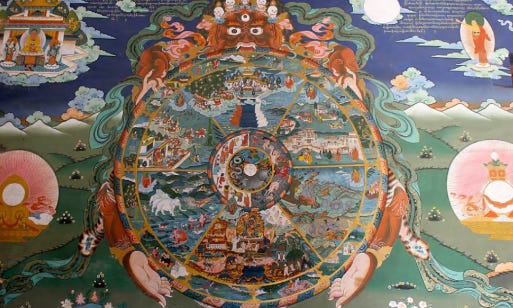
Karma is the universal law of cause and effect, asserting that every action, thought, and word—whether good or bad—has corresponding consequences that will manifest in the future, either in this life or subsequent ones. It is not merely fate but the sum of an individual’s volitional actions and their ethical implications. Positive actions generate good karma, leading to favorable outcomes, while negative actions create bad karma, resulting in undesirable experiences. This principle underscores the importance of ethical living and personal responsibility.
The concept of Samsara describes the continuous cycle of birth, death, and rebirth (reincarnation) that souls undergo. Driven by Karma, souls transmigrate from one body to another until liberation is achieved. The quality of one’s future rebirth is determined by the accumulated karma from past lives. The ultimate spiritual goal in many Hindu traditions is Moksha, liberation from this cycle of Samsara, achieved through spiritual understanding, virtuous action, and devotion, leading to a state of ultimate freedom and union with the Divine (Brahman).
⌨️Buddhism: Four Noble Truths
Buddhism, founded by Siddhartha Gautama (the Buddha) in ancient India, offers a profound framework for understanding the nature of suffering and the path to liberation. Its core teachings are succinctly encapsulated in the Four Noble Truths, which serve as the foundation of Buddhist philosophy and practice.
The First Noble Truth, Dukkha, asserts that life inherently involves suffering, dissatisfaction, and impermanence. This suffering manifests in various forms, from physical pain and emotional distress to the subtle unease arising from impermanence and the inability to find lasting satisfaction in transient phenomena. It’s not merely about gross suffering but also the inherent unsatisfactoriness of existence bound by craving and attachment.
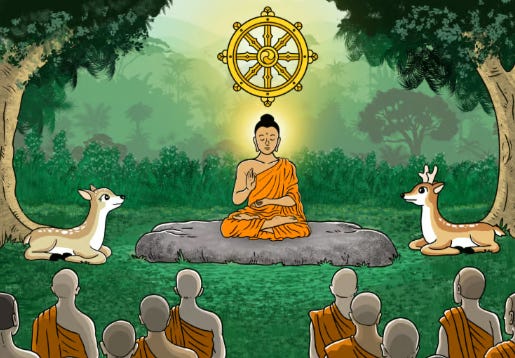
The Second Noble Truth, Samudaya, identifies the origin of suffering as craving (tanha) and attachment. This craving extends to sensual pleasures, existence itself, and even non-existence, leading individuals to cling to impermanent things and experiences. It is this insatiable desire and clinging that perpetuate the cycle of samsara (rebirth) and, consequently, suffering. Understanding this origin is crucial for addressing the root cause of dissatisfaction.
The Third Noble Truth, Nirodha, declares that suffering can cease. This cessation is achieved by eliminating craving and attachment, leading to a state of complete liberation and peace known as Nirvana. Nirvana is not an afterlife but a profound state of being free from suffering, ignorance, and the cycle of rebirth, representing the ultimate goal of Buddhist practice.
Finally, the Fourth Noble Truth, Magga, outlines the path to the cessation of suffering: the Eightfold Path. This practical guide consists of Right Understanding, Right Thought, Right Speech, Right Action, Right Livelihood, Right Effort, Right Mindfulness, and Right Concentration. By cultivating these eight inter-related aspects, practitioners can gradually overcome craving and attachment, leading to enlightenment and Nirvana.
🖥️Sikhism: One God, equality
Sikhism, a distinct monotheistic religion, originated in the Punjab region of the Indian subcontinent during the 15th century CE, established by Guru Nanak Dev Ji. Its foundational principle is the unwavering belief in One God, known as Waheguru. Waheguru is considered to be the ultimate reality, a singular, formless, timeless, and all-pervading creator and sustainer of the universe. This concept of divine unity emphasizes that God is neither male nor female, transcending all human distinctions and existing beyond creation while also being immanent within it. Sikh teachings strongly reject idolatry and the worship of multiple deities, focusing solely on devotion to this one universal God.
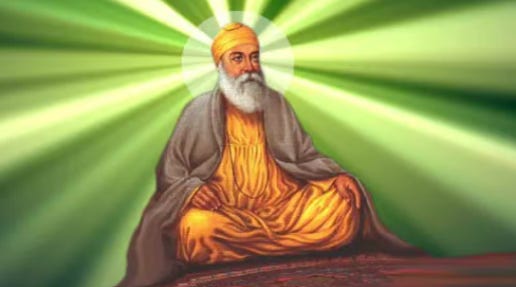
A cornerstone of Sikh philosophy and practice is the radical commitment to the equality of all people, regardless of their caste, creed, gender, religion, or social status. This principle emerged in a historical context marked by rigid social hierarchies and discrimination. Guru Nanak actively challenged these divisions, teaching that all human beings are equal in the eyes of God and should be treated with dignity and respect. This egalitarian ethos is manifested through communal practices such as Langar, the free community kitchen in gurdwaras (Sikh temples), where everyone, regardless of background, sits together to share a meal, symbolizing and reinforcing social equality.
Furthermore, Sikhism actively promotes the idea of universal brotherhood and sisterhood, emphasizing selfless service (Seva) to humanity and upholding moral virtues. The rejection of superficial distinctions and the focus on inner spiritual purity and righteous living are central to achieving spiritual liberation. The Sikh faith encourages an active, engaged life in the world, combining spiritual devotion with social responsibility, all rooted in the belief in one divine source and the inherent equality of all creation.
🖱️Jainism: Non-violence, asceticism
Jainism, an ancient Indian religion, emerged around the 6th century BCE as a distinct spiritual path emphasizing profound self-discipline and an extraordinary commitment to non-violence. Its foundational principle is Ahimsa, or non-harm, which extends to all living beings—human, animal, plant, and even microscopic life forms. Jains strive to avoid causing harm through thought, word, and deed, making it a central tenet that influences every aspect of their lives, from dietary choices (strict vegetarianism/veganism) and occupations (avoiding professions that involve harming living beings) to their daily movements and speech.

This radical dedication to non-violence stems from the belief that all living entities possess a soul (jiva) and are interconnected. Causing harm accumulates negative karma, hindering the soul’s liberation. Therefore, the practice of Ahimsa is not merely an ethical guideline but a spiritual imperative, aimed at purifying the soul and achieving liberation (Moksha) from the cycle of rebirth (samsara). This deep reverence for all life forms is a defining characteristic of the Jain faith, setting it apart with its rigorous ethical framework.
Another defining characteristic of Jainism is its emphasis on asceticism, which involves severe self-discipline, renunciation of worldly pleasures, and rigorous spiritual practices. Jain monks and nuns undertake vows of celibacy, poverty, and non-possession, often engaging in extensive fasting, meditation, and bodily austerities to purify the soul and detach from material attachments. This pursuit of asceticism is believed to burn off accumulated karma and lead to spiritual enlightenment (kevala jnana) and ultimate liberation. Through these practices of non-violence and asceticism, Jains aim to achieve a state of perfect knowledge, peace, and freedom.
Summary
Hinduism - Cosmic Laws and Cycles
Hinduism’s core concepts include Dharma (righteous conduct and cosmic order).
Karma dictates that all actions have corresponding consequences across lifetimes.
Samsara is the continuous cycle of birth, death, and rebirth driven by karma.
The ultimate aim for many Hindus is Moksha, liberation from this cycle.
Buddhism - Understanding and Ending Suffering
Buddhism is founded on the Four Noble Truths presented by Siddhartha Gautama.
The first truth identifies suffering (Dukkha) as inherent to life.
The second truth attributes suffering to craving and attachment (Samudaya).
The third truth states that suffering can cease by eliminating craving (Nirodha).
The fourth truth outlines the Eightfold Path as the way to achieve cessation (Magga), leading to Nirvana.
Sikhism - Divine Unity and Human Equality
Sikhism is a monotheistic faith centered on the belief in one God, Waheguru.
It strongly emphasizes the fundamental equality of all people regardless of background.
This principle of equality is practiced through communal activities like Langar.
Sikhism promotes selfless service and rejects social hierarchies.
Jainism - Extreme Non-violence and Self-Control
Jainism’s core tenet is Ahimsa, absolute non-violence towards all living beings.
This commitment extends to actions, thoughts, and even subtle forms of life.
Asceticism, including rigorous self-discipline and renunciation, is central to Jain practice.
Through these practices, Jains aim to purify the soul and achieve liberation (Moksha) from rebirth.
Answer of the day
In Buddhism, what are the core truths about suffering and its cessation?
Four Noble Truths.
The Four Noble Truths are foundational to Buddhism, explaining the nature of suffering (Dukkha), its origin, its cessation, and the path to its cessation. Taught by the Buddha, these truths provide the philosophical backbone for achieving enlightenment and liberation from the cycle of rebirth, making them a central tenet of this Dharmic religion.
That’s A Wrap!
Want to take a break? You can unsubscribe anytime by clicking “unsubscribe” at the bottom of your email.