

Psychology: Foundations and Intelligence
Exploring Psychology's Origins and the Nature, Measurement, and Types of Intelligence.


Happy Monday!
Insight Trunk is a free lifetime library—a modern replacement for outdated encyclopedias. From Monday to Saturday, we deliver a 10-minute read on a specific subject, with fresh topics each week. Two years later, we revisit each theme with updated insights from our archives—so you’ll never miss a thing. You can unsubscribe anytime using the link at the bottom of this newsletter.
Today, we dive into the foundations of psychology, exploring its methods and history. Our main focus is Intelligence, examining various theories like multiple intelligences and the concept of IQ. We’ll also briefly touch on the nature vs. nurture debate and the importance of emotional intelligence. Get ready to think!
🧑💻 In this week’s edition: Psychology
Monday - Foundations and Intelligence
Tuesday - Motivation and Emotion
Wednesday - Personality and Dark Triads
Thursday - Social Psychology and Behavior
Friday - Learning and Memory
Saturday - Disorders and Treatment
Question of the day
Which specific type of intelligence addresses the ability to manage one’s own and others’ feelings?
Let’s find out !
Foundations and Intelligence
Let’s break it down in today discussion:
The Scope and Methods of Psychological Inquiry
Conceptualizing and Measuring Intelligence
Environmental and Hereditary Influences on IQ
The Significance of Emotional Intelligence
Read Time : 10 minutes
🔬 The Scope and Methods of Psychological Inquiry
Psychology, defined as the scientific study of behavior and mental processes, operates with the fundamental goal of describing, explaining, predicting, and ultimately modifying human and animal actions. This discipline is distinct from philosophy because it relies heavily on empirical evidence gathered through rigorous, systematic observation. This scientific rigor requires psychologists to use specific, measurable methods to ensure the validity and reliability of their findings across diverse populations and contexts.
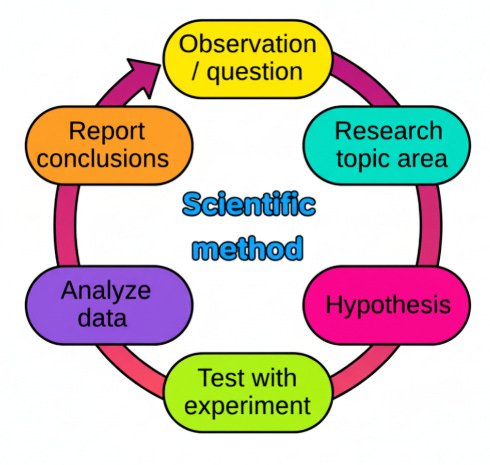
The primary research methodologies employed in psychology can be broadly categorized. Experimental research is considered the gold standard for establishing causation, where an independent variable is systematically manipulated to observe its effect on a dependent variable, often involving control groups for comparison. For example, a study might manipulate sleep deprivation to measure its impact on memory recall. Correlational studies, conversely, examine the degree of relationship between two or more variables, such as the correlation between hours spent studying and exam scores; these studies can identify associations but cannot determine cause-and-effect.
Furthermore, techniques like surveys, naturalistic observation, and in-depth case studies provide valuable descriptive data. Naturalistic observation, for instance, involves observing behavior in its native environment without interference, while case studies allow for the intensive analysis of a rare condition or unique individual. The choice of method is dictated by the specific research question, ensuring the collected data is appropriate for drawing accurate scientific conclusions about human behavior.
Watch this video to explore methods of testing in psychology in more detail.
💡 Conceptualizing and Measuring Intelligence
The construct of intelligence is complex, leading to the development of various theoretical models. One influential perspective is Charles Spearman’s two-factor theory, which posits a single underlying ability, the general intelligence factor (g), that influences performance on all cognitive tasks. Conversely, Howard Gardner’s theory of multiple intelligences argues that intelligence comprises several distinct, independent abilities, such as linguistic, logical-mathematical, spatial, and bodily-kinesthetic intelligence, suggesting a broader view of human capabilities.

To quantify these abilities, psychologists rely on standardized assessment tools. The most widely recognized of these is the Intelligence Quotient (IQ) test. Historically, the Stanford-Binet Intelligence Scales and the Wechsler Adult Intelligence Scale (WAIS), or its child counterpart (WISC), have been foundational. These instruments measure a range of cognitive domains, including working memory, processing speed, verbal comprehension, and perceptual reasoning, translating the scores into a standardized quotient.
The calculated IQ score is intended to reflect an individual’s intellectual potential relative to their age peer group, with 100 representing the average. The scores follow a normal distribution (bell curve) across the population. However, it is imperative to acknowledge that these assessments measure a specific set of cognitive skills and do not capture the full scope of human ability as proposed by theories like Gardner’s.
Get a deeper understanding about how we should measure intelligence with this video.
🧬 Environmental and Hereditary Influences on IQ
The nature versus nurture debate constitutes a core inquiry in the study of intelligence, focusing on the relative contributions of genetics and environment to an individual’s intellectual quotient (IQ). Nature refers to the role of heredity, emphasizing that cognitive capacity is substantially influenced by the genetic material inherited from parents. Studies of identical twins reared apart often show higher correlations in their IQ scores than fraternal twins or non-sibling pairs, providing strong evidence for a genetic component.

Conversely, the nurture side of the debate highlights the critical impact of environmental factors. These encompass a broad spectrum of influences, including the quality of early childhood education, exposure to stimulating home environments, and access to adequate nutrition and healthcare. For example, the well-documented Flynn Effect, which refers to the steady global rise in average IQ scores over decades, is primarily attributed to improvements in environmental factors like better schooling and societal complexity.
Contemporary psychological consensus maintains that intelligence is not determined by one factor alone but is a product of a complex interaction between genetic predispositions and environmental input. Genetic potential may set a range for cognitive ability, but the environment determines where within that range an individual’s actual IQ score will fall. This interactionist perspective underscores the necessity of both biological and experiential factors in shaping intellectual development.
Read this article to expand your knowledge on this topic.
💖 The Significance of Emotional Intelligence
Emotional Intelligence (EQ) represents a crucial psychological concept distinct from traditional measures of academic intelligence (IQ). Defined as the capacity to monitor one’s own and other people’s emotions, to discriminate between different emotions and label them appropriately, and to use emotional information to guide thinking and behavior. The foundational model, proposed by Salovey and Mayer, highlights four key components: perceiving emotions, using emotions to facilitate thought, understanding emotions, and managing emotions.
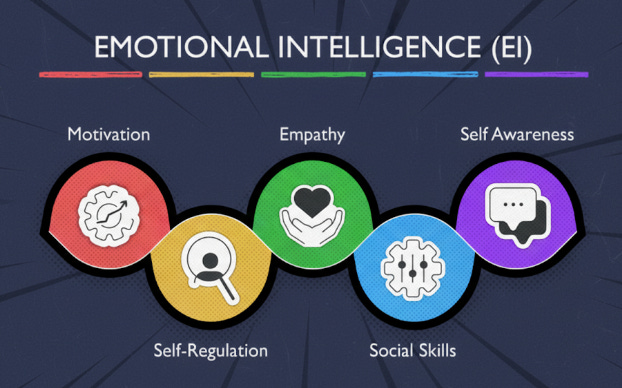
The development and application of EQ are intrinsically linked to social cognition skills. Social cognition involves the psychological processes that enable individuals to perceive, interpret, and process information about other people and social situations. For example, a high level of EQ allows an individual to accurately interpret nonverbal cues (like body language) and understand the perspective of another person, which are fundamental social cognition skills.
High emotional intelligence is consistently correlated with superior outcomes in various life domains. In professional settings, individuals with high EQ often demonstrate effective leadership and conflict resolution abilities. Personally, high EQ is associated with improved mental health, stronger interpersonal relationships, and enhanced overall life satisfaction, illustrating its vital role in successful human adaptation and functioning beyond mere cognitive ability.
To explore emotional intelligence in more detail, watch this video.
Summary
Defining and Investigating Psychology
Psychology scientifically studies the mind and behavior (how people think, feel, and act).
The field relies on empirical evidence gathered through systematic methods.
Experiments are used to establish cause-and-effect relationships between variables.
Other key methods include correlational studies (to find associations) and in-depth case studies.
Understanding these research techniques is essential for interpreting psychological concepts.
Models and Measurement of Intelligence
Intelligence is a complex construct with multiple theoretical models attempting to explain it.
Spearman proposed a single general intelligence factor (g) underlying all cognitive tasks.
Gardner’s theory suggests multiple independent intelligences (e.g., spatial, musical).
The primary tools for assessing cognitive ability are standardized IQ tests (like the WAIS).
IQ tests measure abilities like working memory and verbal comprehension relative to peers.
The Debate Over Intelligence’s Origins
The nature vs. nurture debate questions whether intelligence is primarily genetic or environmental.
Evidence from twin studies supports the role of heredity (nature) in determining potential.
Environmental factors (nurture) include education, nutrition, and home stimulation.
The Flynn Effect—the global rise in IQ scores—is largely attributed to environmental improvements.
Modern consensus holds that both genetics and environment interact to shape an individual’s final IQ score.
Emotional and Social Aspects of Intelligence
Emotional Intelligence (EQ) is the capacity to perceive, understand, and manage emotions.
EQ is linked to social cognition skills—the ability to process information about social situations.
The Salovey-Mayer model details four components of EQ, including managing one’s emotions.
High EQ is associated with better leadership, conflict resolution, and stronger personal relationships.
This construct highlights cognitive abilities essential for success beyond traditional academic skills.
Boost Your Emotional Intelligence Today
Practice Self-Awareness: Regularly check in with yourself to name the specific emotions you are currently experiencing.
Active Listening Focus: Intentionally pay attention to nonverbal cues like tone and body language when interacting with others.
Pause Before Reacting: When faced with a challenging trigger, take a deep breath to create space between the feeling and your response.
Seek Perspective Shift: Before judging someone’s behavior, consider their situation or alternative reasons for their actions.
Embrace Constructive Feedback: View criticism as valuable data for growth rather than a personal attack on your identity.
Answer of the day
Which specific type of intelligence addresses the ability to manage one’s own and others’ feelings?
Emotional intelligence.
Emotional intelligence, or EQ, encompasses the ability to perceive, understand, and regulate emotions. This capacity is distinct from academic IQ and is considered vital for success in social interactions and personal well-being, directly impacting one’s ability to navigate complex social environments.
That’s A Wrap!
Want to take a break? You can unsubscribe anytime by clicking “unsubscribe” at the bottom of your email.