

Nutrition: Micronutrients
Vitamins and Minerals: The Essential Components for Health and Function.


Happy Tuesday!
Insight Trunk is a free lifetime library—a modern replacement for outdated encyclopedias. From Monday to Saturday, we deliver a 10-minute read on a specific subject, with fresh topics each week. Two years later, we revisit each theme with updated insights from our archives—so you’ll never miss a thing. You can unsubscribe anytime using the link at the bottom of this newsletter.
After covering the large macronutrients, we shift focus to micronutrients. Today, we explore vitamins and minerals, the essential compounds your body needs in small amounts. Understanding their diverse roles and food sources is key to preventing common deficiencies and supporting health.
🧑💻 In this week’s edition: Nutrition
Monday - Macronutrients
Tuesday - Micronutrients
Wednesday - Digestion, Absorption, and Metabolism
Thursday - Energy Balance and Weight Management
Friday - Diet Planning and Food Guidelines
Saturday - Contemporary and Applied Nutrition
Question of the day
Which class of vitamins requires dietary fat for proper absorption in the body?
Let’s find out !
Micronutrients
Let’s break it down in today discussion:
Vitamins: Organic Regulators of Metabolism
Minerals: Inorganic Elements for Structure and Signaling
Classification: Water-Soluble vs. Fat-Soluble Vitamins
Deficiencies and Sourcing: Preventing Nutritional Gaps
Read Time : 10 minutes
💊 Vitamins: Organic Regulators of Metabolism
Vitamins are a category of organic micronutrients that are indispensable for regulating a vast array of metabolic and physiological activities. They are not utilized as energy sources but function primarily as coenzymes or cofactors. This means they assist enzymes in converting substrates into products, thereby facilitating critical processes such as energy release from macronutrients, red blood cell formation, and DNA synthesis.
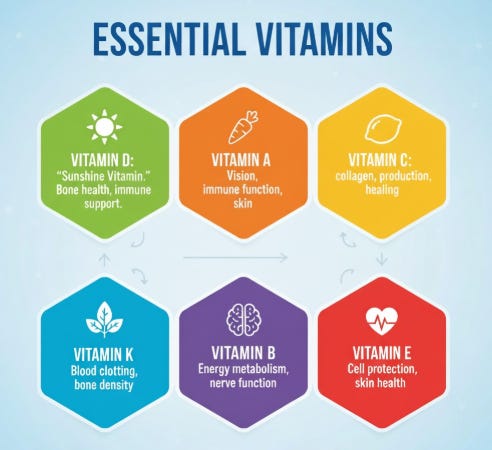
Because the human body’s capacity to synthesize vitamins is limited or non-existent (with exceptions like Vitamin D), they must be consistently sourced through the diet. A deficiency in any specific vitamin can severely disrupt the corresponding metabolic pathway, leading to clinical manifestations. For instance, Thiamin (B1) is essential for energy metabolism, and its deficiency can lead to beriberi.
The dietary requirement for these compounds, though small, is absolute for maintaining optimal health. Their diverse functions underscore the necessity of consuming a varied, whole-food diet to ensure synergistic interactions and proper bodily function.
Learn more about every type of vitamins by watching this video!
🧱 Minerals: Inorganic Elements for Structure and Signaling
Minerals constitute the inorganic micronutrients that are crucial for structural formation and regulatory processes within the human body. Unlike vitamins, minerals are simple chemical elements that are indestructible, retaining their original form whether in food or utilized within biological systems. They are functionally categorized as either major minerals (required in amounts greater than 100 mg per day) or trace minerals (needed in smaller quantities).
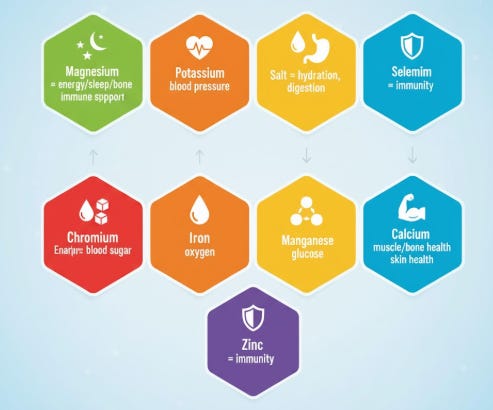
The structural roles of minerals are exemplified by Calcium and Phosphorus, which are primary components of bone tissue, providing rigidity and strength. Beyond structure, minerals serve essential regulatory functions. Sodium and Potassium, for example, are electrolytes vital for maintaining fluid balance, nerve impulse transmission, and muscle contraction.
Furthermore, minerals are integral components of many complex molecules. Iron is the active core of the hemoglobin protein, enabling the transport of oxygen in the blood, and Iodine is necessary for the synthesis of thyroid hormones that regulate metabolism. Diverse food sources, including dairy, meats, and leafy greens, are required to meet the body’s varied mineral demands.
For a deeper understanding about minerals, check out this video.
💧 Classification: Water-Soluble vs. Fat-Soluble Vitamins
Vitamins are systematically differentiated based on their solubility, a chemical property that fundamentally determines their absorption, circulation, and storage mechanisms within the body. This classification yields two distinct groups: water-soluble and fat-soluble vitamins.
Water-soluble vitamins, encompassing the eight B vitamins and Vitamin C, dissolve readily in water and are absorbed directly into the bloodstream. Because they are not typically stored in large quantities and are readily excreted by the kidneys, consistent daily dietary intake is necessary to maintain adequate levels and prevent rapid deficiency.
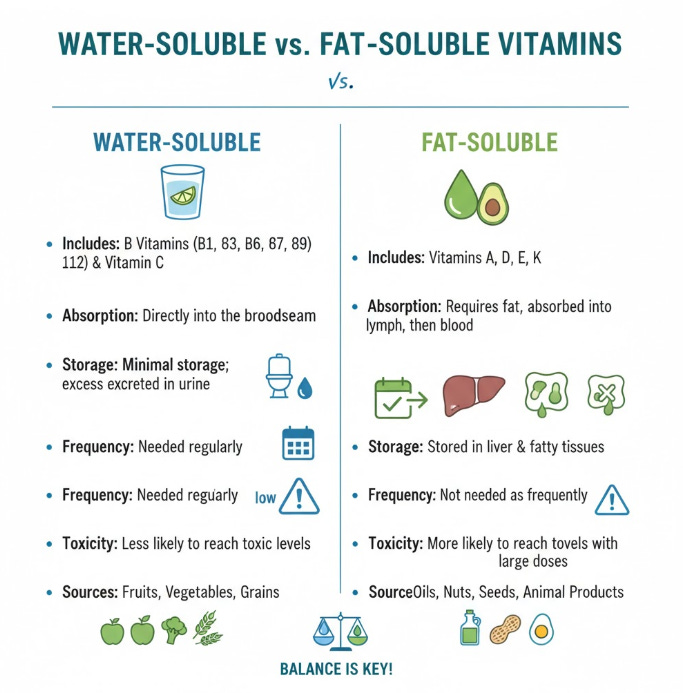
Conversely, fat-soluble vitamins (A, D, E, and K) require the presence of dietary fat and bile for efficient absorption into the lymphatic system before entering circulation. These vitamins are stored in the liver and adipose tissues; consequently, the body can draw upon reserves, but excessive consumption can lead to hypervitaminosis, a state of toxicity due due to accumulation.
Understanding these solubility characteristics is crucial for appropriate dietary planning and for assessing the potential risks associated with high-dose supplementation.
This video will give you further insights into the topic.
🍎 Deficiencies and Sourcing: Preventing Nutritional Gaps
Inadequate intake of essential micronutrients can culminate in specific deficiency diseases, posing a significant risk to public health. These deficiencies arise when long-term dietary patterns fail to meet the body’s required amounts of vitamins or minerals, disrupting crucial metabolic pathways. Classic examples include Iron deficiency anemia, the most common global deficiency, characterized by fatigue due to impaired oxygen transport, and Vitamin D deficiency, leading to skeletal disorders like rickets in children.
The most effective strategy for preventing these deficiencies is the adoption of a diverse and nutrient-rich diet, emphasizing whole and minimally processed foods. A wide array of food groups contributes specific micronutrients; for example, citrus fruits are excellent sources of Vitamin C, dairy products provide substantial Calcium, and fortified cereals often supply B vitamins and Iron.

The principle of dietary variety ensures synergistic nutrient intake, where different foods complement each other to cover the full spectrum of micronutrient needs. Public health initiatives, such as food fortification programs, also play a vital role in addressing prevalent deficiencies by adding essential micronutrients to commonly consumed staples.
Summary
Vitamins – Organic Regulators
Vitamins are organic compounds required in minimal amounts for biological functions.
They primarily serve as coenzymes, helping enzymes facilitate essential metabolic reactions like energy release.
The body cannot produce most vitamins sufficiently, making continuous dietary intake mandatory.
A deficiency in any vitamin can lead to specific, recognizable disruptions in bodily processes.
Minerals – Structure and Signaling
Minerals are inorganic elements that are chemically stable within the body and serve structural and regulatory roles.
They are categorized as major or trace based on the daily quantity required by the body.
Minerals like Calcium and Phosphorus provide structural integrity to bones and teeth.
Regulatory functions include nerve signaling, fluid balance (electrolytes), and oxygen transport (Iron in hemoglobin).
Solubility – Water-Soluble vs. Fat-Soluble
Water-soluble vitamins (B and C) dissolve easily and are absorbed directly into the bloodstream.
Due to their rapid excretion, water-soluble vitamins require consistent, regular dietary replenishment.
Fat-soluble vitamins (A, D, E, K) need dietary fat for proper absorption and utilization.
Fat-soluble vitamins are stored in body tissues, which means excessive intake can lead to accumulation and toxicity.
Deficiencies and Sourcing
A lack of micronutrients over time leads to specific deficiency diseases, such as anemia from Iron deficiency.
The best prevention strategy is consistently consuming a varied diet rich in whole and unprocessed foods.
Different food groups, like citrus fruits, dairy, and lean meats, provide distinct profiles of essential vitamins and minerals.
Food fortification is an effective public health measure used to combat widespread, common nutritional deficiencies.
Pairing tips for optimal mineral absorption.
Pair plant-based Iron with Vitamin C to enhance uptake. Vitamin C converts non-heme iron (from beans or spinach) into a more absorbable form for the body.
Consume Vitamin D sources alongside Calcium-rich foods. Vitamin D acts as a key hormone that is absolutely necessary for the intestinal absorption of dietary Calcium.
Add healthy fats (lipids) to raw vegetables containing Vitamins A, D, E, or K. Since these vitamins are fat-soluble, fat is required to facilitate their transport into the lymphatic system.
Avoid drinking coffee or tea immediately with iron-rich meals. The polyphenols found in coffee and tea can bind to non-heme iron, significantly inhibiting its assimilation.
Space out high doses of Calcium supplements from Iron supplements. Calcium and Iron compete for the same absorption pathways in the gut, reducing the efficacy of both minerals.
Answer of the day
Which class of vitamins requires dietary fat for proper absorption in the body?
Fat-soluble vitamins.
Fat-soluble vitamins, specifically A, D, E, and K, are absorbed with the help of dietary lipids. Unlike water-soluble vitamins, they are stored in the body’s fatty tissues and liver. Consuming these vitamins alongside a source of fat is necessary for their effective utilization.
That’s A Wrap!
Want to take a break? You can unsubscribe anytime by clicking “unsubscribe” at the bottom of your email.