

Earth Systems: Solutions and Future Pathways
Focusing on systemic changes, technological innovations, and collective action required for a sustainable global transition.

Happy Saturday!
Insight Trunk is a free lifetime library—a modern replacement for outdated encyclopedias. From Monday to Saturday, we deliver a 10-minute read on a specific subject, with fresh topics each week. Two years later, we revisit each theme with updated insights from our archives—so you’ll never miss a thing. You can unsubscribe anytime using the link at the bottom of this newsletter.
On our final day, we focus entirely on the solutions. We explore the potential of renewable energy and efficiency, the promise of the circular economy and green urban design. We also discuss critical conservation strategies and the essential role of citizen action and global cooperation in building a sustainable future.
🧑💻 In this week’s edition: Earth Systems
Monday - Physical Earth Systems
Tuesday - Climate, Atmosphere, and Biosphere
Wednesday - Human Impact and Environmental Issues
Thursday - Geography and Spatial Analysis
Friday - Sustainable Development Principles
Saturday - Solutions and Future Pathways
Question of the day
What economic system aims to eliminate waste by continuously reusing and regenerating products and materials?
Let’s find out !
Solutions and Future Pathways
Let’s break it down in today discussion:
The Foundational Pillars of Sustainability
The Sustainable Development Goals (SDGs)
Regulatory Mechanisms: Law, Policy, and Governance
Integrating Ecology and Economic Models
Read Time : 10 minutes
⚡ Energy Transition and Efficiency Imperatives
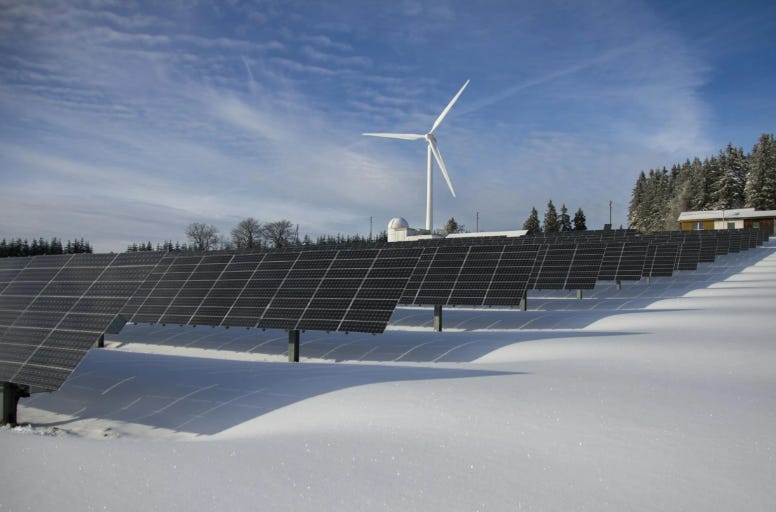
Decoupling economic growth from fossil fuel dependence is the most critical pathway for climate change mitigation and resource security. This transition mandates the rapid deployment of renewable energy technologies, which harness inexhaustible sources. Prime examples include solar photovoltaic (PV) systems, which benefit from steadily decreasing levelized costs of energy, and advanced wind power installations, particularly large-scale offshore farms that utilize consistent, high-velocity winds.
A key technical challenge for these variable renewable sources is grid reliability. Addressing this requires significant investment and innovation in energy storage solutions, such as utility-scale battery banks and pumped hydroelectric storage, to ensure the continuous availability of power regardless of weather conditions.
Complementing this supply-side transformation is the focus on energy efficiency. Efficiency strategies aim to reduce the energy intensity of production and consumption activities. Examples include integrating smart grid technologies to optimize distribution, utilizing sophisticated heat recovery systems in industrial processes, and enforcing stringent energy-efficient building codes that minimize heating and cooling demands.
Systematic improvements in efficiency reduce the total energy requirement, thereby diminishing the burden on both generation capacity and resource extraction, making it an indispensable part of the overall sustainability strategy.
Learn more about what we discussed by watching this video!
🔄 Systems Redesign: Circularity and Green Urbanism
The transition from the environmentally detrimental linear economy (”take-make-dispose”) to the regenerative Circular Economy (CE) model is a crucial systemic solution. The CE operates on three core principles: designing out waste and pollution, keeping products and materials in continuous use, and regenerating natural systems. This framework fundamentally changes how materials are valued and managed throughout their entire lifecycle.
The construction industry, a major consumer of raw materials, benefits significantly from CE application through green building practices. This approach integrates principles like design for disassembly (allowing a building to become a “material bank” at its end-of-life) and prioritizing the reuse of high-value materials. Green buildings also minimize operational environmental impact through advanced insulation and passive solar design for maximum energy efficiency.

At a larger scale, the concept of the Sustainable City integrates these principles through regenerative design and intelligent urban planning. This includes prioritizing dense, mixed-use zoning to reduce transportation needs, investing in highly efficient public transit, and implementing nature-based solutions. Examples of the latter include installing green roofs for stormwater management and using urban wetlands for natural water purification, thereby integrating ecological function directly into the built environment.
Broaden your understanding by watching this video.
🏞️ Biodiversity Protection and Ecological Restoration
Safeguarding global biodiversity necessitates a dual approach of protection and remediation, utilizing diverse conservation strategies. These strategies are categorized as in-situ conservation, which protects species within their natural habitats, and ex-situ conservation, which involves preserving species in artificial environments such as botanical gardens, zoos, and global seed banks.
A core mechanism of in-situ protection is the establishment and rigorous management of Protected Areas (PAs). These PAs, including National Parks and Marine Protected Areas (MPAs), are formally designated and governed to achieve long-term conservation objectives. They are crucial for preserving intact ecosystems, maintaining vital ecosystem services (e.g., carbon sequestration), and enhancing the resilience of habitats against external shocks.

Beyond protection, ecological restoration actively intervenes to repair degraded ecosystems and re-establish their natural function. Techniques range from large-scale reforestation and the restoration of damaged wetlands to controlling invasive alien species that threaten native flora and fauna. Successful restoration projects are essential for recovering lost habitat, reconnecting fragmented landscapes, and increasing overall ecological productivity.
The combination of strict protection, effective governance of PAs, and active restoration efforts forms the strategic foundation for halting the decline in biodiversity and securing the long-term viability of planetary life support systems.
This video offers comprehensive details on the subject.
🌐 Collective Action and Global Partnership
The realization of sustainable development is ultimately dependent upon coordinated efforts across all scales of society. Citizen action provides a vital bottom-up impetus, ranging from individual behavior modification—such as reducing personal carbon footprints and embracing sustainable consumption patterns—to grassroots organizing and community-led initiatives focused on local resilience.
Advocacy—the collective effort of civil society, non-governmental organizations (NGOs), and environmental justice groups—is instrumental in maintaining pressure on state and corporate actors. These groups utilize strategic campaigns and legal challenges to ensure accountability, pushing for transparency in supply chains and the timely implementation of environmental policy commitments.
Crucially, international cooperation formalized through multilateral frameworks, such as the United Nations and its Sustainable Development Goals (SDGs), provides the essential global architecture. This cooperation requires developed nations to fulfil obligations concerning Official Development Assistance (ODA), technology transfer, and capacity building in developing nations.
This unified global approach ensures that shared challenges, such as transboundary pollution and climate change, are addressed through coordinated action, legal agreements, and the equitable sharing of responsibility and knowledge.
Summary
Energy Decoupling through Renewables and Efficiency
Mitigating climate change requires a rapid, systematic shift away from fossil fuels and toward abundant renewable energy sources like solar and wind power.
The variability inherent in these sources necessitates major technological advancements and investment in large-scale energy storage solutions (e.g., batteries) to maintain a reliable power grid.
Energy efficiency is an equally critical strategy, focusing on reducing the overall energy demand through technologies like smart grids and strict energy-efficient building standards.
The goal is to successfully decouple economic prosperity from carbon emissions and resource depletion, allowing for development without environmental degradation.
Systemic Redesign: Circularity and Green Infrastructure
The Circular Economy (CE) is the essential systemic alternative to the unsustainable linear “take-make-dispose” economic model.
CE principles focus on eliminating waste, keeping products and materials in use for extended periods, and actively regenerating natural systems.
The built environment adopts these concepts through green building, which involves designing structures for material reuse and maximizing energy performance through passive design techniques.
Sustainable cities implement integrated planning that prioritizes efficient public transit, mixed-use zoning, and the incorporation of nature-based solutions like green roofs for ecological benefits.
Protecting and Restoring the Biosphere
Conservation strategies are deployed using a dual approach: in-situ protection of species in their natural habitats and ex-situ preservation in controlled environments like seed banks.
A foundational element of in-situ protection is the establishment and effective management of extensive networks of Protected Areas (PAs), including National Parks and Marine Protected Areas (MPAs).
Ecological restoration actively seeks to repair degraded ecosystems through methods like large-scale reforestation and the revitalization of damaged wetlands.
The combination of protection, strategic PA governance, and active restoration is vital for securing biodiversity and maintaining essential ecosystem services.
The Role of Collective Action and Global Governance
Citizen action forms a critical bottom-up mechanism for change, encompassing both individual sustainable lifestyle choices and organized grassroots community initiatives.
Advocacy by civil society organizations and NGOs plays a crucial role in ensuring accountability and influencing policy to integrate social and environmental justice into development plans.
International cooperation, structured through the United Nations and its multilateral agreements like the SDGs, provides the necessary global framework for coordinated action on shared challenges.
Developed nations must fulfill their obligations regarding aid, technology transfer, and knowledge sharing to ensure that the global transition to sustainability is equitable and inclusive.
Quick ways to reduce personal carbon footprint.
Adopt Meatless Days: Consuming plant-based meals even once or twice a week significantly reduces the carbon emissions associated with livestock production.
Choose Digital Over Print: Opt for electronic billing, newsletters, and documents to reduce the environmental footprint of paper production and mail transport.
Unplug Idle Electronics: Completely switch off or unplug appliances and chargers when not in use to eliminate “vampire energy” draw that wastes electricity.
Reduce Air Travel: Offset essential flights or consciously seek alternative transport options like trains or buses for shorter trips to cut aviation emissions.
Answer of the day
What economic system aims to eliminate waste by continuously reusing and regenerating products and materials?
The Circular Economy
The circular economy is a systemic solution that challenges the traditional linear model (”take-make-dispose”). It focuses on designing waste and pollution out of the system, keeping products and materials in use for as long as possible, and regenerating natural systems to conserve resources.
That’s A Wrap!
Want to take a break? You can unsubscribe anytime by clicking “unsubscribe” at the bottom of your email.