

Earth Systems: Climate, Atmosphere, and Biosphere
Examining the composition of the atmosphere, global climate drivers, and the essential components of Earth's living systems.

Happy Tuesday!
Insight Trunk is a free lifetime library—a modern replacement for outdated encyclopedias. From Monday to Saturday, we deliver a 10-minute read on a specific subject, with fresh topics each week. Two years later, we revisit each theme with updated insights from our archives—so you’ll never miss a thing. You can unsubscribe anytime using the link at the bottom of this newsletter.
Today we shift focus to the air and life, exploring the Atmosphere and Biosphere. We will cover the structure of Earth’s climate engine and the global air circulation patterns that define weather and climate zones. Finally, we examine ecosystems, the vital biomes, and fundamental biogeochemical cycles.
🧑💻 In this week’s edition: Earth Systems
Monday - Physical Earth Systems
Tuesday - Climate, Atmosphere, and Biosphere
Wednesday - Human Impact and Environmental Issues
Thursday - Geography and Spatial Analysis
Friday - Sustainable Development Principles
Saturday - Solutions and Future Pathways
Question of the day
What specific atmospheric layer contains the ozone layer that filters most of the sun’s harmful ultraviolet radiation?
Let’s find out !
Climate, Atmosphere, and Biosphere
Let’s break it down in today discussion:
Atmospheric Structure and Energy Equilibrium
Global Circulation and Climate Determination
The Biosphere: Ecosystems, Biomes, and Diversity
Elemental Flows: Biogeochemical Cycling
Read Time : 10 minutes
💨 Atmospheric Structure and Energy Equilibrium
The Earth’s atmosphere is a critical gaseous envelope structured into several thermal layers, beginning with the troposphere, where weather occurs, and extending through the stratosphere, mesosphere, and thermosphere. Its chemical composition is dominated by nitrogen (N2) and oxygen (O2), with trace amounts of gases, notably water vapor and carbon dioxide (CO2), which function as essential greenhouse gases.
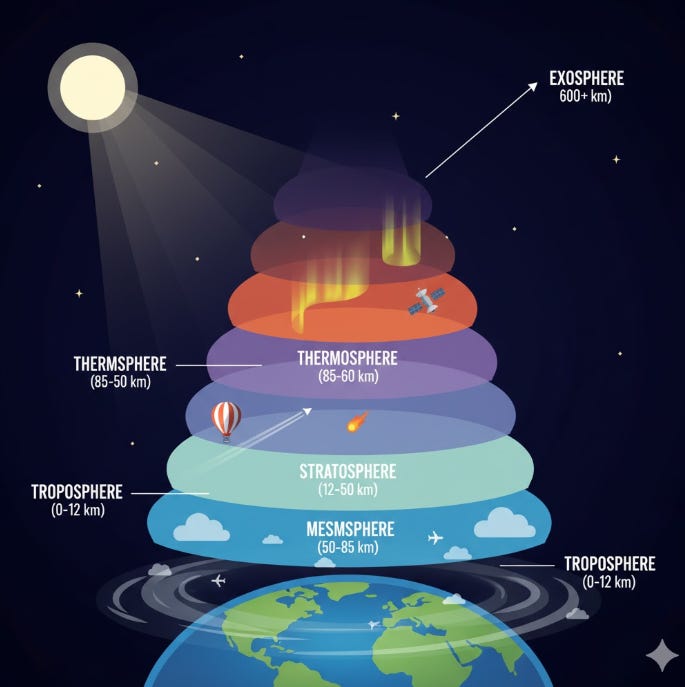
The planet’s temperature stability is maintained by the global energy budget, which represents the balance between incoming shortwave solar radiation and the outgoing longwave terrestrial radiation. Approximately 30% of incoming solar energy is reflected back to space (albedo), while the remaining portion is absorbed by the surface and atmosphere.
The Greenhouse Effect is a natural and necessary phenomenon where greenhouse gases absorb and re-radiate some of the outgoing longwave radiation, trapping heat and maintaining a habitable surface temperature. Any anthropogenic alteration to the concentration of these gases creates an imbalance in this delicate energy budget, leading to the cumulative thermal changes associated with global climate modification.
Learn more about what we discussed by watching this video!
💨 Global Circulation and Climate Determination
The distinction between weather (short-term state of the atmosphere) and climate (long-term average conditions) is fundamental to atmospheric science. Climate is broadly categorized into distinct climate zones (e.g., tropical, arid, polar) primarily defined by their characteristic temperature and precipitation regimes, which are directly influenced by global distribution of solar energy.
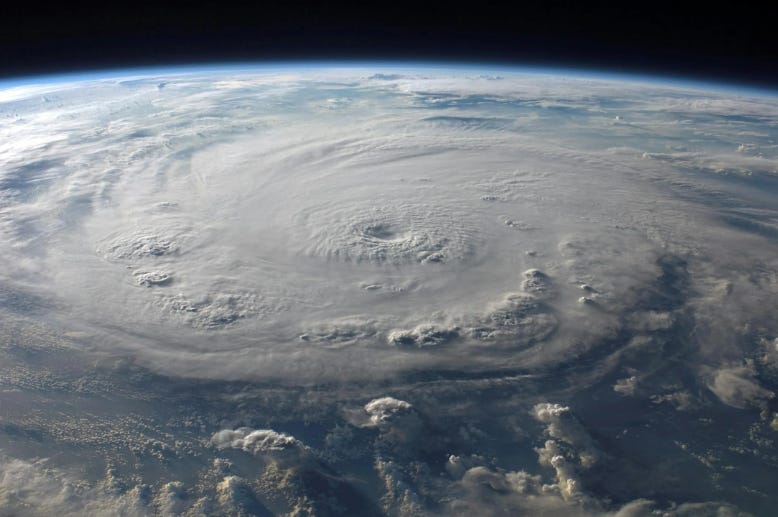
The uneven heating of the Earth’s surface—greatest near the equator and least at the poles—is the driving mechanism for global air circulation. This differential heating creates massive atmospheric convection cells, most notably the Hadley cells near the equator, the Ferrel cells in mid-latitudes, and the Polar cells. These systematic air movements transfer energy from areas of surplus to areas of deficit.
The interplay of these circulation cells and the Coriolis effect establishes persistent surface wind patterns, such as the trade winds, westerlies, and polar easterlies. These prevailing wind systems govern the movement of air masses, define regional pressures, and are ultimately responsible for distributing moisture and heat, thereby determining the long-term climatic characteristics of any given region.
For a deeper understanding, check out this video.
The Biosphere: Ecosystems, Biomes, and Diversity
The biosphere represents the global summation of all ecosystems, encompassing the zone where life exists. Within the biosphere, an ecosystem is defined as a dynamic, functional unit where living organisms (biotic components) interact with their non-living physical and chemical environment (abiotic components). Examples include tropical rainforests, coral reefs, and desert oases.
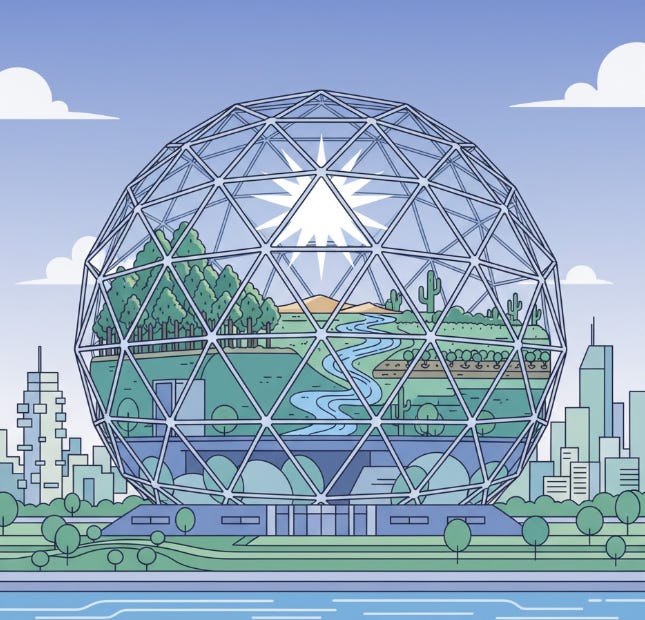
Larger still are biomes, which are major regional or global zones defined primarily by their characteristic climate—specifically temperature and precipitation—and their resulting dominant vegetation types. Terrestrial biomes range from cold tundra and broad-leaved temperate forests to hot savannas and arid deserts, each hosting distinct life forms adapted to those specific conditions.
The ecological health of these systems hinges upon biodiversity, which is the total variety of life at all scales: genetic, species, and ecosystem. High biodiversity confers greater ecosystem resilience and stability against environmental changes. Crucially, diverse ecosystems provide essential ecosystem services—natural processes such as nutrient cycling, pest control, and raw material provision—upon which human societies depend.
This video will give you further insights into the topic.
♻️ Elemental Flows: Biogeochemical Cycling
Life on Earth is sustained by the continuous movement and recycling of essential matter through biogeochemical cycles, which transfer elements between biotic and abiotic reservoirs. These cycles are fundamental to maintaining ecological balance and productivity.
The Carbon (C) Cycle is critically important for energy transfer and climate regulation. Carbon moves between the atmosphere (as CO2), the biosphere (via photosynthesis and respiration), the hydrosphere (dissolved in oceans), and the geosphere (stored in rock and fossil fuels). Perturbations to this cycle, such as the combustion of fossil fuels, increase atmospheric CO2 concentration.
The Nitrogen (N) Cycle is vital for the synthesis of proteins and nucleic acids (DNA/RNA). Although abundant in the atmosphere, N2 is largely unavailable to plants until it is converted into usable forms, such as nitrates (NO3) and ammonia (NH3), primarily through the microbial processes of nitrogen fixation and nitrification.
Complementing these are the Phosphorus (P) Cycle and the Sulfur (S) Cycle. The phosphorus cycle is unique because it lacks a significant gaseous phase, relying on the weathering of rocks for release. The sulfur cycle is critical for protein structure and influences atmospheric chemistry. The efficient functioning of all these elemental cycles underpins the stability of the global ecosystem.
Learn more about what we discussed by watching this video!
Summary
Atmosphere Structure and Earth’s Energy Balance
The atmosphere is structured into distinct layers (e.g., troposphere, stratosphere) and its composition includes essential trace greenhouse gases that trap heat.
Earth’s temperature stability is maintained by the global energy budget, which balances incoming solar radiation with outgoing terrestrial radiation.
The natural Greenhouse Effect is a necessary process where these gases re-radiate heat, keeping the planet warm enough to sustain life.
Human alteration of greenhouse gas concentrations disrupts this natural balance, leading to the cumulative thermal changes associated with global climate modification.
Climate Patterns and Global Air Circulation
Climate refers to the long-term, predictable weather patterns in a region, which classify areas into distinct climate zones (e.g., polar, tropical).
The primary driver of global air movement is the uneven solar heating of the Earth’s surface, being greatest at the equator and least at the poles.
This temperature differential drives large-scale atmospheric convection cells (Hadley, Ferrel, and Polar) that systematically transfer energy around the globe.
The interaction between these circulation cells and the Coriolis effect creates persistent surface wind patterns, which in turn determine regional precipitation and temperature regimes.
Organization of Life: Ecosystems and Biodiversity
The biosphere is the total zone of life, organized into dynamic ecosystems where living (biotic) and non-living (abiotic) components continuously interact.
Biomes are large geographical regions defined by their characteristic climate and dominant vegetation types, such as rainforests or tundra.
Biodiversity is the measure of life’s variety across genetic, species, and ecosystem levels and is crucial for the overall health of the planet.
High biodiversity ensures ecosystem resilience and provides invaluable ecosystem services that are essential for human survival, such as clean water and nutrient cycling.
Elemental Flows: Biogeochemical Cycles
Life is sustained by the continuous movement of matter through essential biogeochemical cycles that transfer elements between the atmosphere, hydrosphere, and lithosphere.
The Carbon Cycle is fundamental for climate, moving carbon between reservoirs via key processes like photosynthesis, respiration, and fossil fuel combustion.
The Nitrogen Cycle is vital for synthesizing biological molecules, relying heavily on microbial action to convert inert atmospheric nitrogen into usable forms.
The Phosphorus and Sulfur Cycles complete the core chemical flows, supporting cellular energy transfer and protein structure, demonstrating the interconnectedness of all Earth systems.
Identify local biome’s characteristic species.
Determine Your Biome: Identify the specific major biome (e.g., Temperate Deciduous Forest, Grassland, Tundra) that characterizes your geographical location based on climate and vegetation.
Research Indicator Species: Learn about 3-5 native plants and animals that are uniquely adapted to and representative of your local biome’s conditions.
Visit a Local Park/Reserve: Observe these characteristic species in their natural habitat to understand their ecological roles and how they interact with the abiotic environment.
Use iNaturalist or Apps: Utilize citizen science platforms to help identify local flora and fauna, contributing to global biodiversity monitoring efforts.
Answer of the day
What specific atmospheric layer contains the ozone layer that filters most of the sun’s harmful ultraviolet radiation?
The Stratosphere
The stratosphere is the second major layer of the atmosphere, located above the troposphere. It contains the vital ozone layer, a concentration of ozone molecules O3 that efficiently absorbs high-energy ultraviolet (UV) radiation from the sun, protecting life on Earth’s surface.
That’s A Wrap!
Want to take a break? You can unsubscribe anytime by clicking “unsubscribe” at the bottom of your email.