

Digital Transformation: Government
Transforming public administration through secure cloud infrastructure, unified digital identity systems, seamless online service portals, and intelligent urban traffic management.

Happy Friday!
Insight Trunk is a free lifetime library—a modern replacement for outdated encyclopedias. From Monday to Saturday, we deliver a 10-minute read on a specific subject, with fresh topics each week. Two years later, we revisit each theme with updated insights from our archives—so you’ll never miss a thing. You can unsubscribe anytime using the link at the bottom of this newsletter.
Today, we explore the world of Government Technology (GovTech). We will discuss how secure cloud platforms are protecting citizen data and how Digital ID systems are modernizing identity verification. We also look at how online portals are streamlining public services and how smart software is optimizing urban traffic.
🧑💻 In this week’s edition: Digital Transformation
Monday - Banking and Finance
Tuesday - Logistics and Supply Chain
Wednesday - Manufacturing
Thursday - Healthcare
Friday - Government
Saturday - Agriculture
Question of the day
What specific GovTech policy mandates that citizens should supply information to the state only one time?
Let’s find out !
Government
Let’s break it down in today discussion:
Sovereign Cloud Infrastructure: The Bastion of Digital Sovereignty
Digital Identity Ecosystems: The Foundation of Trust
Integrated Public Service Portals: The Digital Front Door
Intelligent Traffic Management: The Dynamic Urban Flow
Read Time : 10 minutes
☁️ Sovereign Cloud Infrastructure: The Bastion of Digital Sovereignty
The migration of public sector data to sovereign cloud architectures represents a fundamental modernization of national infrastructure. Unlike traditional legacy systems, which are often siloed and vulnerable to physical degradation, government-grade cloud solutions offer unprecedented scalability and resilience. By enforcing data sovereignty—ensuring that sensitive citizen information remains physically stored within national borders—governments can rigorously comply with strict legal mandates while leveraging the computational power of modern hyperscale data centers to serve the public interest.
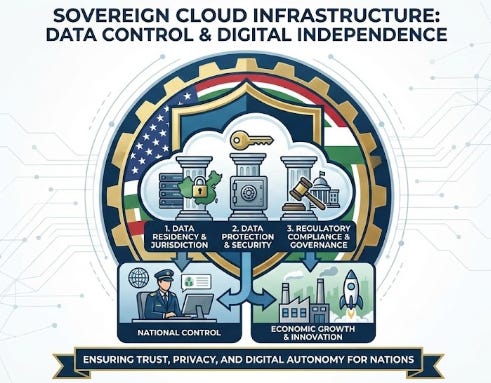
From a security perspective, these platforms implement a “Zero Trust” architecture that assumes no user or device is trustworthy by default. Advanced encryption standards protect data both at rest and in transit, serving as a critical defense against the escalating threat of state-sponsored cyberespionage and ransomware attacks. For instance, when processing millions of annual tax returns or managing sensitive census demographics, cloud environments deploy automated threat detection systems that can isolate and neutralize security anomalies significantly faster than any human operator could.
Furthermore, cloud adoption facilitates robust disaster recovery and the continuity of government operations. In the event of a natural disaster that might destroy a physical server room, cloud-based redundancy ensures that essential public services—such as social security disbursements or emergency response coordination—remain operational with minimal downtime. This transition effectively transforms government IT from a static support function into a dynamic, resilient strategic asset that guarantees the stability of the state.
Get a more thorough explanation in this video.
🆔 Digital Identity Ecosystems: The Foundation of Trust
The implementation of robust Digital Identity (Digital ID) systems constitutes the critical infrastructure necessary for a truly modern, frictionless digital economy. Far surpassing simple username-password combinations, these government-issued credentials utilize advanced Public Key Infrastructure (PKI) to establish a legally binding electronic identity. This technology allows citizens to prove who they are online with the same legal validity as a physical passport, enabling secure remote authentication for high-stakes interactions without the need for in-person verification.

In practical application, a unified Digital ID serves as a master key to the entire spectrum of public and private services. For instance, citizens can utilize a single secure login to execute complex transactions such as filing taxes, signing binding business contracts via qualified electronic signatures (QES), or even casting votes in national elections. This interoperability eliminates the redundancy of maintaining multiple credentials for different agencies, streamlining the user experience while significantly reducing the administrative burden on government departments.
Furthermore, these systems are engineered to enhance privacy and security through data minimization protocols. By employing biometric verification and multi-factor authentication, Digital ID frameworks drastically reduce the incidence of identity theft and fraud compared to traditional paper-based methods. They also empower citizens with greater control over their personal data, often allowing users to consent specifically to which attributes are shared with service providers, thereby fostering a relationship of transparency and trust between the state and the individual.
This video is your next step to mastering the topic.
🏛️ Integrated Public Service Portals: The Digital Front Door
The transition to Integrated Public Service Portals marks a definitive shift in public administration, moving away from fragmented, agency-specific silos toward a unified, user-centric interface. These comprehensive “one-stop shops” aggregate diverse government services—ranging from business licensing and vehicle registration to social welfare applications—into a single, accessible digital environment. This consolidation fundamentally redesigns the citizen experience, transforming bureaucratic interactions from opaque, time-consuming obligations into transparent, efficient digital transactions available 24/7.
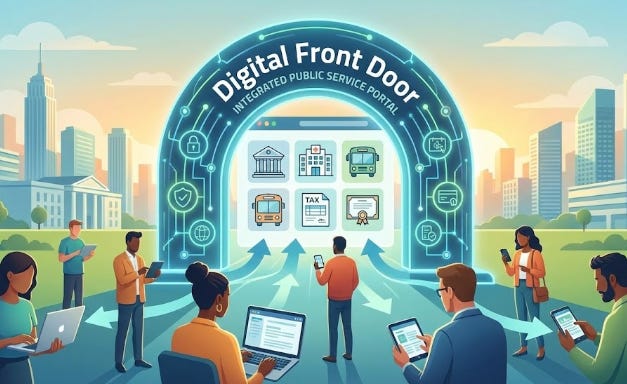
A key driver of this efficiency is the implementation of backend interoperability and data synchronization. Rather than requiring citizens to repeatedly submit the same demographic data to different departments, advanced portals utilize secure API layers to automatically populate application forms by retrieving verified information from existing national registries. For instance, when an entrepreneur applies for a new trade permit, the system can instantly cross-reference corporate tax records and legal identification data to validate eligibility in real-time. This automation drastically accelerates processing times while minimizing the risk of human error.
Moreover, these portals introduce a layer of radical transparency to the administrative process. Modern dashboards allow applicants to track the precise status of their requests, view anticipated completion dates, and receive automated notifications regarding required actions. By digitizing the end-to-end workflow, governments can significantly reduce the operational costs associated with physical front-office operations while simultaneously elevating public trust through responsive and reliable service delivery.
Explore additional perspectives by watching this video.
🚦 Intelligent Traffic Management: The Dynamic Urban Flow
The deployment of Intelligent Traffic Management Systems (ITMS) represents a critical evolution in urban planning, transitioning city infrastructure from static, timer-based regulation to dynamic, real-time orchestration. By leveraging a dense network of Internet of Things (IoT) sensors, high-resolution cameras, and induction loops embedded in roadways, these systems continuously harvest granular data on vehicle density, speed, and queue lengths. This constant influx of telemetry allows central control algorithms to analyze traffic patterns instantaneously, replacing rigid historical schedules with adaptive logic that responds to the actual conditions on the ground.

A primary application of this technology is the automated optimization of signal timing to mitigate congestion during peak hours. For example, during a sudden surge in commuter volume or a localized sporting event, the system can autonomously extend green light durations on arterial roads to flush out bottlenecks while temporarily holding cross-traffic. Furthermore, these systems facilitate “green wave” prioritization for emergency services; by communicating directly with ambulance or fire truck transponders, traffic lights can preemptively clear intersections, drastically reducing response times for critical incidents where every second is vital.
Beyond immediate operational efficiency, smart traffic management contributes significantly to long-term sustainability goals. By smoothing traffic flow and minimizing the frequency of start-stop cycles, cities can achieve a substantial reduction in vehicle idling time. This optimization directly correlates to lower fuel consumption and a measurable decrease in urban carbon emissions, creating a cleaner, more breathable environment while simultaneously recovering millions of hours in lost economic productivity for the citizenry.
Learn more about what we discussed by watching this video!
Summary
Secure Cloud Infrastructure
Sovereign Modernization: Governments are transitioning from aging, physical legacy systems to sovereign cloud architectures to ensure scalability and prevent data degradation.
Data Sovereignty: The cloud strategy focuses on keeping sensitive citizen information within national borders to strictly comply with legal and security mandates.
Zero Trust Security: Advanced platforms assume no user is safe by default, employing military-grade encryption to protect against state-sponsored cyberespionage.
Disaster Resilience: Cloud redundancy ensures that critical public services, such as social security payments, remain operational even if physical server rooms are destroyed.
Automated Defense: AI-driven threat detection systems isolate and neutralize security anomalies instantly, far surpassing the speed of human operators.
Digital Identity Systems
Legally Binding Credentials: Digital ID systems utilize Public Key Infrastructure (PKI) to create electronic identities that carry the same legal weight as a physical passport.
Universal Access: A single secure login acts as a “master key,” allowing citizens to access disparate services—from banking to voting—without multiple passwords.
Enhanced Privacy: Data minimization protocols allow users to share only specific attributes (like age or address) rather than their entire profile, fostering trust.
Fraud Reduction: Biometric verification and multi-factor authentication drastically lower the rates of identity theft compared to traditional paper-based checks.
Interoperability: The system eliminates administrative redundancy by allowing different government agencies to recognize and accept the same verified credential.
Integrated Public Service Portals
The Digital Front Door: Comprehensive portals aggregate diverse services—such as licensing, taxes, and welfare—into a single, user-friendly “one-stop shop” available 24/7.
Automated Verification: Backend APIs connect with national registries to auto-populate application forms, significantly reducing manual data entry and human error.
Radical Transparency: Modern dashboards replace opaque bureaucracy, allowing applicants to track the real-time status of their requests and view completion dates.
Cost Efficiency: Digitizing the end-to-end workflow reduces the operational overhead of maintaining physical front offices and manual processing teams.
Streamlined Experience: The shift transforms government interaction from a time-consuming burden into a seamless, transactional experience similar to private e-commerce.
Intelligent Traffic Management
Dynamic Orchestration: Cities are replacing static, timer-based traffic lights with adaptive systems that respond to real-time data from IoT sensors and cameras.
Congestion Relief: Algorithms autonomously adjust signal durations during peak hours to flush out bottlenecks and improve traffic flow across the city network.
Emergency Prioritization: The system communicates with emergency vehicles to create “green waves,” clearing intersections to ensure ambulances reach critical incidents faster.
Environmental Impact: By reducing start-stop driving cycles and idling time, smart traffic management significantly lowers urban carbon emissions and fuel consumption.
Data-Driven Planning: Continuous telemetry provides city planners with accurate data on vehicle density, allowing for smarter infrastructure decisions rather than reliance on historical estimates.
Five Tips to Secure Your Digital Government Identity
Enable Multi-Factor Authentication (MFA): Always activate two-step verification on government portals to add a critical layer of defense beyond just your password.
Monitor Account Activity Regularly: Check your login history and service request logs frequently to spot any unauthorized access or suspicious applications immediately.
Use Unique, Strong Passwords: Avoid reusing credentials from social media or email for government services; use a password manager to generate complex, unique keys.
Be Wary of Phishing Emails: Verify the sender’s address carefully before clicking links, as official government agencies will rarely ask for sensitive passwords via email.
Update Your Device Software: Keep your computer and smartphone operating systems patched to the latest version to close security loopholes that hackers exploit.
Answer of the day
What specific GovTech policy mandates that citizens should supply information to the state only one time?
The Once-Only Principle (OOP).
This digital government standard ensures that public administrations share data internally. If a citizen provides their address or birth certificate to one agency, other departments must retrieve that data via secure exchange layers rather than asking the citizen to submit the same documents again, drastically reducing administrative red tape.
That’s A Wrap!
Want to take a break? You can unsubscribe anytime by clicking “unsubscribe” at the bottom of your email.
Couldn't agree more. This 'digital front door' for public services sounds wonderfull. As a booklover, I relate to the ease of an instantly available, organized library. I'm really curious about the 'one-time information' policy; that's a huge step for efficency and trust.
The Once-Only Principle is probaby the most underrated policy shift in GovTech. Having built data integration systems for municipal governments, the backend complexity of actually implementing OOP is wild, every agency has their own legacy schema and data quality standards. The real win isn't just convenience, it's that forcing agencies to share data internally creates accountability around data accuracy that didn't exist when citizens were the ones manually bridging information gaps.